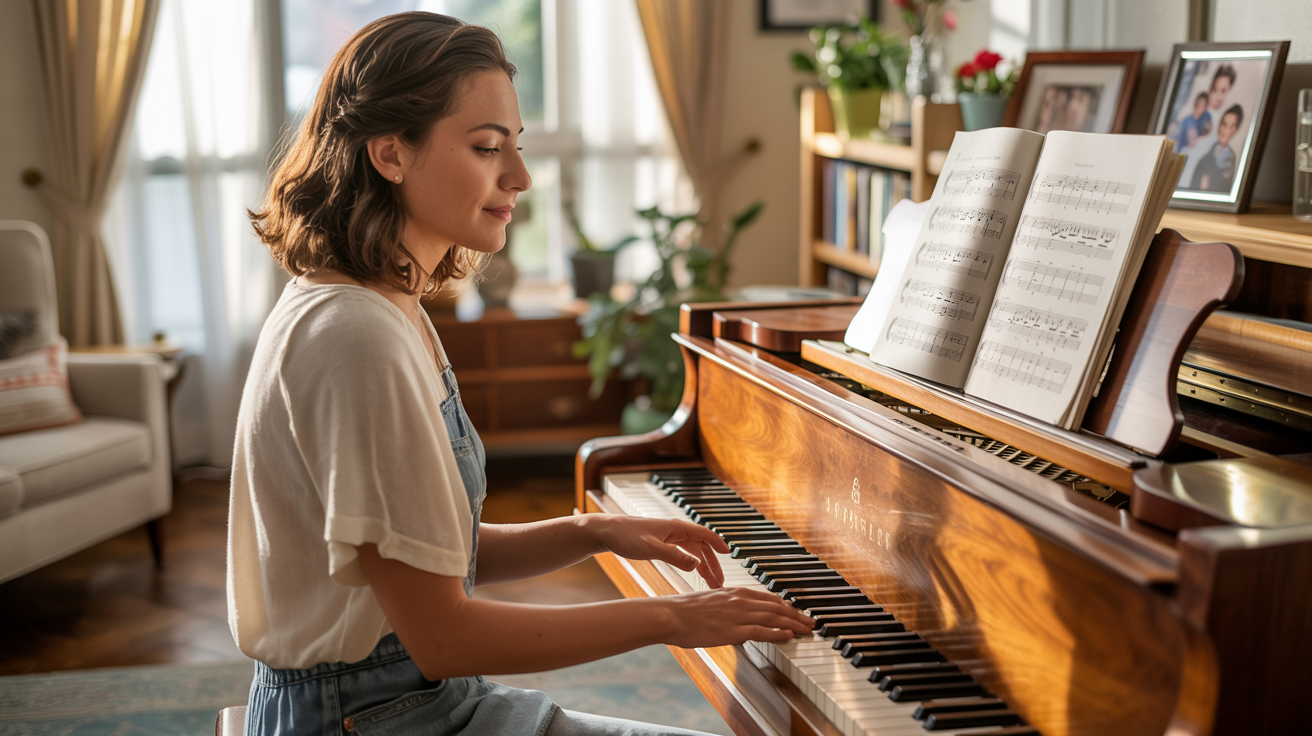
You sit down at the piano bench, fingers hovering over the keys. You've watched countless videos, downloaded three different apps, and promised yourself this time will be different. But where do you actually start?
Here's what typically happens: Most people dive in with big plans, only to feel lost within weeks. The good news? Learning piano at home absolutely works when you follow a clear path. At Playtime Music Academy of Greater Baltimore, we've spent over 30 years helping families master piano from home, and we've seen what actually gets results.
This guide walks you through five practical steps that work for real people with real schedules. Whether you're in Baltimore or beyond, these strategies will help you build genuine skills without the guesswork.
Why Home Piano Learning Works Better Than Ever in 2025
Let's talk about what's changed. The piano education market hit $2.58 billion globally in 2025, with digital tools driving most of that growth. But here's the interesting part: 78% of learners now choose flexible home-based options because they fit actual lives.
You don't need a conservatory. You need consistency.
Research from Flowkey's 2025 analytics shows that 15-minute daily sessions produce twice the progress compared to sporadic longer practices. That's huge for busy adults or parents coordinating kids' schedules around Owings Mills traffic.
But there's a catch. Only 25% of completely self-taught adults reach intermediate level within a year. Compare that to the 70% who combine apps with occasional expert check-ins. The difference? Feedback catches problems before they become permanent habits.
We've noticed this firsthand. Families in Reisterstown and Pikesville often start with apps, then reach out when hand coordination feels awkward or rhythm doesn't click. That's exactly when a quick adjustment makes everything easier.
Want to skip months of trial-and-error? If you're in the Baltimore metro area, our in-home visits help you start with proper technique from day one. Book a free consultation with a piano teacher in Owings Mills to see if our Harmony Home Method fits your goals.
Step 1: Choose the Right Instrument for Your Space and Budget
Here's where people get stuck before they even play a note. The piano versus keyboard question stops progress cold.
What Actually Matters for Home Learners
You need 88 weighted keys. Period. This isn't about being fancy. Weighted keys mimic how acoustic pianos respond, and Roland's 2025 data confirms they improve technique retention by 55% compared to cheaper unweighted models.
Digital pianos have outsold acoustic models 2:1 for home learners, sitting in the $200-$600 range for solid beginner options. They fit Randallstown apartments, never need tuning, and connect to teaching apps that track your progress.
Smart Features That Actually Help
Look for these specific elements:
- Touch-sensitive keys that respond to how hard you press
- Built-in metronome to develop steady timing
- Headphone jack for late-night practice without disturbing roommates
- MIDI connectivity to work with popular learning platforms
Models like the Yamaha P45 bundle include everything to start. But avoid buying solely based on online specs. What feels right under your fingers matters more than feature lists.
Pro tip: If you're in Pikesville or nearby, we offer equipment trials during in-home consultations. You'll know within 10 minutes if a model fits your touch style, saving returns and frustration.
Step 2: Build a Practice Space That Supports Success
Your environment shapes your results more than most people realize.
The Setup That Keeps You Coming Back
Find a spot where your piano stays set up and ready. Clearing the dining table each session adds friction that kills motivation. Even a corner of your bedroom works better than constant setup and breakdown.
What your practice area needs:
- Proper lighting so you see keys and sheet music without squinting
- Comfortable bench height where your forearms stay parallel to the floor
- Minimal distractions during your focused 15-30 minute sessions
- Easy access to your phone or tablet for app-based lessons
Room acoustics matter less with digital pianos, but if you're using acoustic, avoid placing it against exterior walls where temperature swings affect tuning.
Creating Visual Cues for Consistency
Here's a subtle trick: Keep your method book or tablet open to your current page. When you walk past, you see exactly where to pick up. This tiny detail increases practice frequency by removing the "where was I?" barrier.
Around 60% of Maryland learners now integrate platforms like Yousician for structured daily routines. The visual progress bars genuinely help on days when motivation dips.
Step 3: Follow a Realistic Daily Practice Routine
This step separates people who progress from those who plateau.
The 15-30 Minute Framework That Works
Forget the idea that more hours equal faster results. Flowkey's 2025 data proves that consistent short sessions beat irregular marathon practices every time.
Here's your daily structure:
Warm-up (5 minutes): Simple scales or finger exercises. C major scale, hands separately at first. This isn't boring; it's literally waking up the connection between your brain and fingers.
New material (10 minutes): Work on one small section of your current piece. Not the whole song. Just 4-8 measures until they feel comfortable.
Review (10 minutes): Play through songs you've already learned. This builds confidence and reinforces muscle memory.
Cool down (5 minutes, optional): Free play. Mess around with melodies you know by ear.
What Happens Without Structure
We see this pattern repeatedly: Someone practices for an hour on Sunday, skips Monday through Thursday, crams on Friday. By the following week, they've forgotten half of what clicked on Sunday.
Your brain builds neural pathways through repetition with rest in between. The 40% of adults who struggle with self-study usually lack this consistent structure, not talent.
If your routine keeps slipping, that's normal. It doesn't mean piano isn't for you. It might mean you'd benefit from external accountability. Our online lessons work anywhere in Baltimore and beyond, giving you regular check-ins that keep momentum alive without rigid schedules.
Step 4: Master Basic Technique Without Developing Bad Habits
Here's the uncomfortable truth: 70% of solo learners develop habits that eventually limit their progress. Not because they're doing it wrong on purpose, but because they can't see what they can't see.
The Fundamentals That Actually Matter
Hand position: Curve your fingers as if holding a small ball. Your knuckles should be the highest points, not your wrists. This single adjustment prevents tension that leads to pain.
Posture: Sit tall but relaxed. Your shoulders shouldn't creep toward your ears when you play difficult passages. If they do, stop and reset.
Slow practice: This is where magic happens. X user Lektor Thaulow notes that playing slowly and perfectly from day one cuts errors by half. Your brain forms patterns based on what you repeat. Repeat mistakes at speed, and you'll learn from them.
The Visualization Technique That Boosts Accuracy
Before you touch the keys, imagine playing the passage perfectly. See your fingers moving to the right notes. Astrid Wilde, sharing her experience on X in 2025, points out this approach improved her accuracy by 40%.
It sounds simple because it is. Your brain rehearses the movement pattern without reinforcing wrong notes.
When to Get Expert Eyes on Your Technique
Can you play "Hot Cross Buns" with both hands? Good start. Struggling with hand independence after a few weeks? That's the signal.
Around 60% of learners hit a wall around month three when attempting full songs with both hands. This is exactly when our Harmony Home Method proves most valuable. A single session catching technical issues early saves months of relearning.
For families in Reisterstown, our in-home visits let us observe your natural playing position and make instant adjustments. For everyone else, online video lessons accomplish the same thing. You play, we watch, we fix what's holding you back.
Step 5: Track Milestones and Know When to Level Up
Progress feels invisible without markers. Here's what realistic advancement looks like.
Your First 90 Days: What to Expect
Week 1-2: Single-hand melodies. "Mary Had a Little Lamb" or "Ode to Joy." If you can play these smoothly without looking at your hands constantly, you're on track.
Week 3-4: Basic chords with your left hand while your right plays melody. This coordination takes patience. Your brain is literally building new pathways.
Month 2: Simple songs with both hands playing different parts. "Lean on Me" or hymns work well here. You'll mess up the timing at first. Everyone does.
Month 3: Complete pieces from start to finish without stopping. If you reach this point smoothly, celebrate genuinely. You've done what most people who say they'll "learn someday" never accomplish.
The Wall That Stops Most People
Here's where things get real. After three months, you'll likely feel stuck. New pieces seem impossibly hard. Your progress slows down noticeably.
This is completely normal. You're transitioning from beginner to intermediate, and that gap requires different skills than what got you here.
Class Central's 2025 research confirms that 60% of learners plateau at this exact stage without guidance. The solution isn't practicing more hours. It's practicing smarter with someone who can identify your specific sticking points.
Signs You're Ready for Structured Lessons
You've hit any of these:
- Rhythm feels consistently off, but you can't figure out why
- Your hands work fine separately but fall apart together
- You want to learn songs beyond beginner books
- You're curious about music theory but don't know where to start
- You've been stuck on the same piece for three weeks
That last one especially. Three weeks on one piece without progress means you need fresh eyes on your approach.
At Playtime Music Academy of Greater Baltimore, our online sessions pick up exactly where self-study leaves off. We've worked with thousands of families since 1993, and we know the precise moments when a quick adjustment unlocks weeks of progress.
What Makes the Harmony Home Method Different
We developed this approach over 30 years of in-home teaching throughout Baltimore County. It's not revolutionary. It's just realistic.
Step 1: Free assessment helps us understand your current level and goals. No pressure, no sales pitch. Just honest conversation about what you want from piano.
Step 2: Personalized practice plan fits your schedule and learning style. Adults learning for cognitive benefits need different pacing than kids working toward school performances.
Step 3: App-integrated daily work keeps you progressing between lessons. We recommend specific exercises in platforms you already use.
Step 4: Regular check-ins (online or in-home) catch technical issues before they become permanent. Most students need this every 2-4 weeks when starting out.
Step 5: Flexible progression to voice, clarinet, or saxophone lessons once piano fundamentals click. Many families discover music becomes a household activity.
This method acknowledges what works: Apps provide structure, but humans provide insight. The 80% retention rate in hybrid learning models proves this combination beats either approach alone.
Common Mistakes That Slow Progress (And How to Avoid Them)
Practicing Too Fast Too Soon
Speed comes from accuracy, not from pushing tempo. If you can't play something slowly and perfectly, you definitely can't play it fast and perfectly. Slow down until it's right, then gradually increase speed over days or weeks.
Skipping the Boring Stuff
Scales and finger exercises feel tedious. They also build the foundation for everything else. Skipping them is like trying to run before you can walk. Just five minutes daily makes a massive difference.
Comparing Your Timeline to Others
Your coworker's kid plays Chopin after six months? Good for them. Your progress is yours alone. Adult learners especially fall into this trap. The 42% of new students over 40 bring different strengths like patience and pattern recognition that kids lack.
Not Recording Yourself
You can't hear what you actually sound like while concentrating on playing. Record short clips weekly. You'll catch rhythmic issues and celebrate improvement you might otherwise miss.
Quitting When It Gets Hard
The month three wall stops more people than lack of talent ever will. Difficulty means you're growing. Getting through this stage determines whether piano becomes a lifelong skill or another "I tried that once" story.
If you're feeling stuck right now, that's actually a good sign. You've progressed enough to encounter real challenges. Reach out to our team and let's figure out what specific adjustment will get you moving again.
Your Next Steps: Turning Information Into Action
You've got the roadmap. Now comes the doing part.
This week: Set up your practice space and commit to one 15-minute session daily. Not "when you have time." Pick a specific time and protect it.
This month: Work through basic songs until you can play three completely from memory. Track your progress in a simple notebook.
By month three: Assess honestly. Are you progressing steadily or spinning your wheels? If you're stuck, that's when expert guidance makes the biggest difference.
Remember: At Playtime Music Academy of Greater Baltimore, we've watched many people go from hesitant beginners to confident players. The common thread? They showed up consistently and asked for help when they needed it.
Whether you're in Owings Mills, Pikesville, Randallstown, Reisterstown, or learning online from anywhere in the country, we're here when you're ready to accelerate your progress.
The piano is waiting. Your fingers know what to do. Now it's just about giving them consistent opportunities to learn.
Frequently Asked Questions About Learning Piano at Home
Can adults over 40 really learn piano effectively at home?
Absolutely. 42% of new students over 40 bring advantages like better focus and discipline. Your brain builds neural pathways at any age through consistent practice. Adult learners often progress faster in theory concepts than younger students. The key is accepting that your progress timeline is uniquely yours.
How long until I can play a recognizable song?
Most students play simple melodies like "Twinkle Twinkle Little Star" within the first week. Full songs with both hands typically come around month two or three, depending on practice consistency. The Pianote Survey from 2025 shows that learners practicing 15-30 minutes daily reach this milestone twice as fast as those with irregular schedules.
Do I need an expensive piano to learn properly at home?
No. A quality digital piano in the $200-$600 range with 88 weighted keys gives you everything needed to develop proper technique. The weighted keys are essential because they train your fingers correctly, but you don't need the acoustic piano price tag. Digital models actually offer advantages like volume control, recording capabilities, and app integration.
What if I don't have time for daily practice?
Even 10 minutes daily beats hour-long sessions twice a week. Your brain consolidates learning during rest periods between practices. If you genuinely can't find 10 minutes most days, piano might need to wait for a different life season. That's okay too. Better to be honest than frustrated.
Should I learn to read music right away or start by ear?
Start with basic note reading alongside learning songs. You don't need to master theory before playing, but completely ignoring notation limits your long-term options. Apps like Simply Piano introduce reading gradually while keeping things fun. If sheet music feels overwhelming after a few months, that's when working with an instructor helps connect the dots.
How do I know if my technique is correct without a teacher watching?
Record yourself playing and compare to professional videos of the same pieces. Watch specifically for hand position, posture, and finger movement. The visualization technique mentioned earlier helps too. But honestly, technique is the hardest thing to self-correct. The 70% of solo learners who develop limiting habits can't see their own blind spots. Getting periodic feedback, even just monthly, prevents years of potential relearning.
What's the difference between online lessons and in-home visits?
Online lessons work from anywhere and offer flexible scheduling. You can learn from Baltimore or beyond. In-home visits, available in Owings Mills, Reisterstown, Randallstown, and Pikesville, let instructors observe your setup and playing position in your actual practice environment. Some students prefer the accountability of someone in their space. Others love the convenience of online. Both approaches deliver results through the Harmony Home Method we use at Playtime Music Academy of Greater Baltimore.
When should I consider adding voice or other instruments?
Once piano fundamentals feel comfortable, usually after 6-12 months, many students get curious about expanding. Voice training complements piano beautifully since you're already reading music. Clarinet and saxophone build on rhythmic skills you've developed. We've seen families turn into household ensembles this way. There's no rush, but when curiosity hits, that's your signal.
Ready to Make Real Progress?
Learning piano at home works. You've seen the evidence, the practical steps, and the realistic timelines.
The question isn't whether you can do this. It's whether you're ready to commit to consistent practice and ask for help when you need it.
At Playtime Music Academy of Greater Baltimore, we've spent over 30 years since 1993 helping families exactly like yours. Our online lessons reach students anywhere, and our in-home visits serve Owings Mills, Pikesville, Reisterstown, and Randallstown.
We teach piano, keyboard, voice, clarinet, and saxophone through methods that actually fit real schedules and real lives.
Your first step? Reach out for a free consultation. We'll talk about where you're starting, where you want to go, and whether our Harmony Home Method fits your goals.
No pressure. Just honest conversation about helping you make music happen.
The piano isn't going anywhere. But your motivation might. Reach out while you're thinking about it, and let's turn this intention into reality.