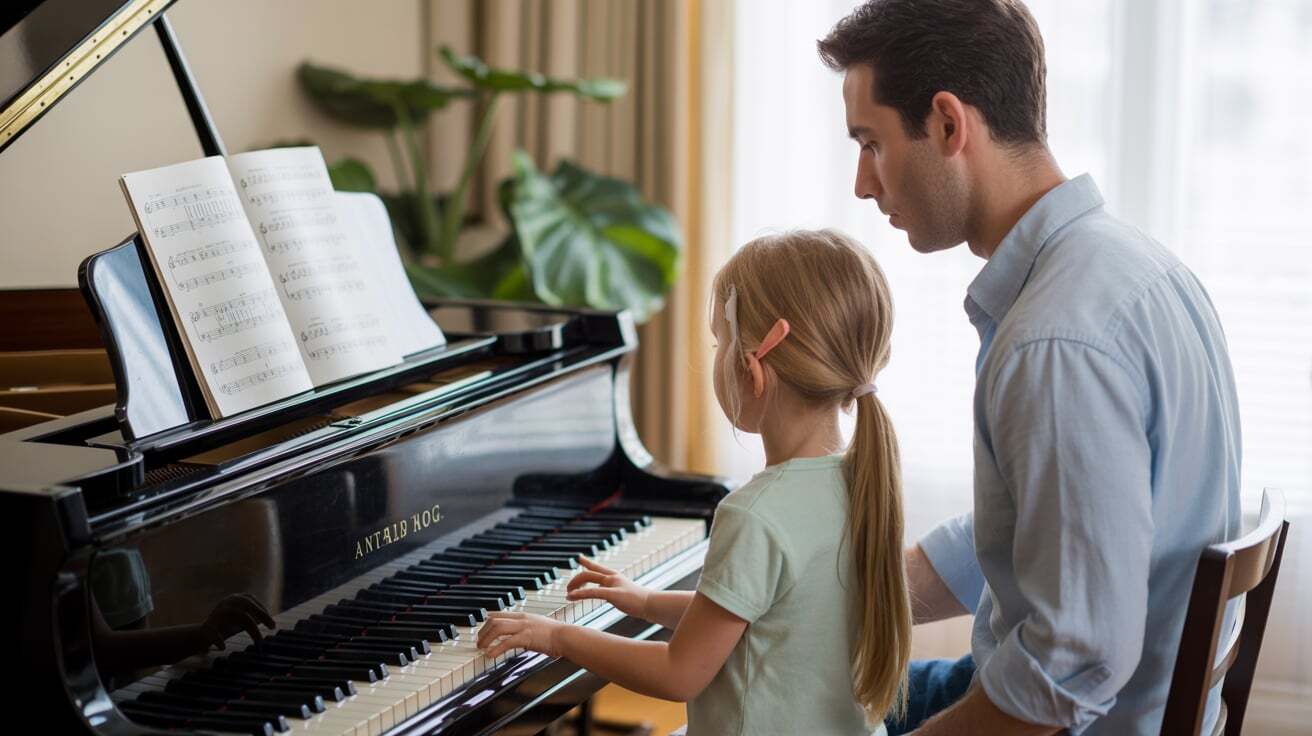
Getting your child started with piano doesn't have to mean driving across town twice a week. What if lessons could happen right in your living room?
The shift toward in-home piano lessons has transformed how families approach music education. With over 35% of new music lesson enrollments now choosing in-home or online formats, parents are discovering something powerful: learning works better when it happens where kids feel most comfortable.
Here's what makes sense about this approach. When you skip the commute and settle into familiar surroundings, everything changes. Kids relax. Parents breathe easier. And the piano becomes part of daily life instead of another errand to squeeze in.
At Playtime Music Academy of Greater Baltimore, we've been bringing music into homes across the USA since 1993, and we've watched many families find their rhythm with this model. Whether you're curious about how registration actually works or wondering if in-home piano lessons in Reisterstown fit your schedule, the process is simpler than you might think.
Why Parents Are Choosing In-Home Piano Lessons Right Now
The numbers tell an interesting story. 68% of parents now prefer in-home options over traditional music schools, and it's not hard to see why.
Time matters. When lessons happen at home, you're not spending 30 minutes driving for a 30-minute lesson. That hour gets folded back into your evening, which means dinner happens on time and homework doesn't pile up.
But there's more to it than convenience. Kids learn differently when they're in their own space. The piano they practice on during the week becomes the same instrument where they have their lesson. No adjusting to unfamiliar keys or trying to remember what worked on a different bench.
The Real Benefits That Keep Families Engaged
Personalized attention sits at the heart of why in-home lessons work. Your child isn't waiting in a lobby or rushing to keep pace with group dynamics. The lesson moves at their speed, tackles their specific challenges, and builds on what actually interests them.
As our experts note: "In-home music lessons benefits go beyond convenience—they create deeper learning, stronger habits, and joyful routines that involve the whole family."
Here's what that looks like in practice:
- More practice time because the piano is always there
- Family involvement that happens naturally when everyone's home
- Comfortable environment where kids feel confident trying new things
- Flexible scheduling that adapts to your household rhythms
The piano learning market hit $1.62 billion in 2024, with projections showing continued growth driven by families seeking exactly this kind of accessibility.
What Makes Registration Actually Easy in 2025
Signing up for in-home piano lessons has gotten straightforward. The days of complicated enrollment paperwork are fading as music schools adapt to what families need.
Most registration now happens through simple online forms that take about five minutes to complete. At Playtime Music Academy of Greater Baltimore, you share basic information like your child's age, any previous musical experience, and your preferred schedule windows. Some schools offer direct email contact or phone consultations for families who prefer talking through options first.
The Step-by-Step Registration Process
Start with basic information. When you reach out, you'll answer questions about your child's experience level, goals, and any specific learning styles or needs. This helps match you with the right instructor.
Choose your format. Decide between fully in-home visits, online lessons via video platform, or a hybrid approach that combines both. Each has its place depending on your family's setup and preferences.
Schedule your first lesson. You'll work with the music school to find times that mesh with your routine. In-home teachers typically offer flexibility that traditional studios can't match.
Prepare your space. You'll need a piano or keyboard, adequate lighting, and a quiet area. If you're doing online lessons, a stable internet connection and device with video capability are essential.
The process reflects what industry experts emphasize. From our instructors: "The benefits of taking in-home piano lessons include learning in a familiar setting & at your own pace. Also great for home-schooled kids."
What Technology Is Changing About Sign-Ups
2025 has brought what some call a "piano boom," driven by affordable keyboards and interactive apps like Flowkey and Simply Piano. These tools haven't replaced teachers but they've made the overall learning ecosystem more accessible.
AI-driven teaching tools now help with practice between lessons, giving kids instant feedback. This means when your child sits down with their in-home instructor, the lesson time focuses on nuanced technique and musical interpretation rather than basic note-reading.
Registration systems have gotten smarter too. Many schools now use platforms that let you:
- See available instructor schedules in real-time
- Complete verification steps online
- Receive automated confirmations and reminders
- Access payment portals that handle billing smoothly
Common Questions About Getting Started
How quickly can lessons actually start?
Most families begin within one to two weeks of registering. The timeline depends on instructor availability in your area and how flexible your schedule is. Schools with larger teaching rosters often match families faster.
Do I need to buy a piano before registering?
Not always. Many students start with a keyboard, which costs significantly less than an acoustic piano. Your instructor can guide you on minimum key requirements (usually 61 or 88 weighted keys) during the registration conversation.
What happens if my child wants to switch between online and in-home formats?
Flexibility here varies by school, but many now offer hybrid options. You might do in-home visits twice a month and online lessons the other weeks. Discuss this during registration to understand what's possible.
How do I know if the instructor is reliable?
Reputable music schools vet their teachers through background checks and verify credentials. During registration, ask about instructor qualifications, teaching experience, and what happens if your assigned teacher needs to reschedule.
Why Some Students Drop Out (And How Easy Registration Helps)
Here's something that doesn't get discussed enough. About 50% of young people stop music activities by age 17, often because of logistical barriers that make lessons feel like a burden instead of a joy.
Transportation issues top the list. When a parent works late or the weather turns bad, suddenly that lesson becomes impossible. The student falls behind, frustration builds, and music stops being fun.
In-home registration helps solve this by removing the travel variable entirely. Your child's commitment to learning stays separate from your ability to drive across town twice a week.
The data shows something else interesting. While 92% of public school students have access to music classes, only 49% actually participate. In-home options with streamlined sign-ups might bridge that gap by making music education feel more accessible and less institutional.
Current Trends Shaping In-Home Piano Education
The landscape keeps shifting in ways that benefit families. The global online music education market stood at $2.19 billion in 2025 and is projected to reach $4.9 billion by 2030, with piano holding a dominant 39.3% share.
What's driving this growth? Several factors are converging:
Hybrid models that blend in-home visits with online elements are becoming standard. You might have your primary lesson at home each week, then access video tutorials or practice apps between sessions.
Long-tail search queries reflect how people actually look for lessons now. Instead of searching "piano lessons," families type full questions like "what's the easiest way to register for in-home piano lessons for beginners" or "how to find reliable in-home piano teachers near me without a physical school."
This shift toward natural language searches aligns with how AI-driven tools process information. Music schools that make registration genuinely easy and clearly communicate their process tend to appear in these results.
What Families Are Prioritizing When They Register
Conversations during registration reveal what matters most to parents right now:
- Safety verification of instructors coming into homes
- Clear cancellation policies that respect busy schedules
- Transparent communication about what happens if a teacher gets sick
- Progress tracking that shows what their child is learning
The Playtime Music Academy of Greater Baltimore captures this sentiment well: "In-home lessons are the ultimate convenience, especially for busy parents. Lessons and practice take place in the same consistent environment."
That consistency matters more than many realize. When practice and lessons happen in the same room, on the same instrument, kids build habits that stick.
Making Your Registration Decision
You've probably noticed that piano training centers are expected to expand from $5.18 billion in 2021 to $6.61 billion by 2025 in the USA. That growth reflects genuine demand from families who want accessible music education.
The question isn't whether in-home lessons work. They do. The question is whether this approach fits your family's specific situation.
Consider these factors:
Your home environment. Do you have a dedicated space where lessons can happen without constant interruptions? If younger siblings run through every five minutes, online lessons might work better initially.
Your child's personality. Some kids thrive with the routine of leaving home for lessons. Others focus better in familiar surroundings. You know which type you're raising.
Your schedule flexibility. In-home teachers often offer evening and weekend slots that traditional studios don't. If your weekdays are unpredictable, this flexibility might be essential.
Your long-term goals. Are you looking for serious musical training or exploring whether your child enjoys piano? Both are valid, but your answer affects which registration path makes sense.
For families seeking additional support beyond piano, Playtime Music Academy of Greater Baltimore also offers voice, clarinet, and saxophone instruction, all available with the same in-home or online flexibility.
Ready to Start Your Musical Journey?
Registration doesn't need to feel complicated. The families who have the best experience tend to be those who reach out early, ask questions during the process, and communicate clearly about their needs and schedule.
At Playtime Music Academy of Greater Baltimore, we've been doing this since 1993, bringing music education into homes across the USA. That's many families who've discovered that learning piano doesn't require a studio, a commute, or a rigid schedule that adds stress to already busy lives.
The process starts with a simple conversation. You share what you're looking for. We explain how our program works, match you with an instructor who fits your needs, and coordinate a schedule that makes sense for your household.
Piano holds 39.3% of the online music education market for a reason. It's accessible, it's versatile, and it provides a foundation for understanding music that benefits kids whether they continue with formal lessons for years or simply enjoy playing for themselves.
Your child's musical education could start this week. Registration takes minutes. The impact lasts years.
Reach out to discuss how in-home or online piano lessons might work for your family. We'll walk you through the options, answer your questions, and help you decide if this is the right fit. No pressure, no complicated forms, just a straightforward conversation about bringing music into your home.
Frequently Asked Questions About In-Home Piano Registration
What information do I need ready when I register?
Have your child's age, any previous music experience, your preferred lesson days and times, and your location. If you already own a piano or keyboard, knowing the model helps instructors prepare appropriate materials.
Can I register for just one child or do siblings need to sign up together?
You can register any number of students. Some families prefer back-to-back lessons for multiple children, while others schedule on different days. Discuss your preference during registration.
What if we need to cancel or reschedule lessons frequently?
Most music schools have policies about cancellations and makeups. Ask about this specifically during registration so you understand what flexibility exists and any associated fees.
How do payments work for in-home lessons?
Payment structures vary by school. Some use monthly tuition, others charge per lesson. Many now offer online payment portals that handle billing automatically. Clarify this during sign-up to avoid surprises.
Is there a minimum commitment period when I register?
This depends on the school's policy. Some require a semester commitment, others work month-to-month. If you're unsure whether piano is right for your child, ask about trial periods during registration.
What happens if my assigned instructor isn't the right fit?
Reputable schools understand that student-teacher match matters. Ask during registration about their policy for requesting a different instructor if needed.
Do you serve students outside of Maryland?
Yes, we provide in-home and online piano lessons throughout the USA. Online lessons allow us to work with families regardless of location, while in-home visits depend on instructor availability in your specific area.
Can adults register for in-home piano lessons too?
Absolutely. While much of the conversation focuses on children, adults often benefit even more from in-home lessons. The convenience factor matters just as much, and personalized pacing helps adult learners progress without feeling rushed.